
Why Banks Don't Warn You Before Payments Leave Your Account
You check your bank account.
A payment has already gone.
Sound familiar?

The Problem With Bank Notifications
Most banks are designed to:
- Record transactions
- Notify you after payments
But not before.
That means you're always reacting instead of preparing.
Why This Matters
Without advance notice:
- You can't plan properly
- You can't adjust spending
- You can't avoid surprises

The Gap Banks Don't Fill
Banks focus on security and transaction history.
But they don't provide forward visibility of upcoming payments.

A Better Approach
To stay in control, you need:
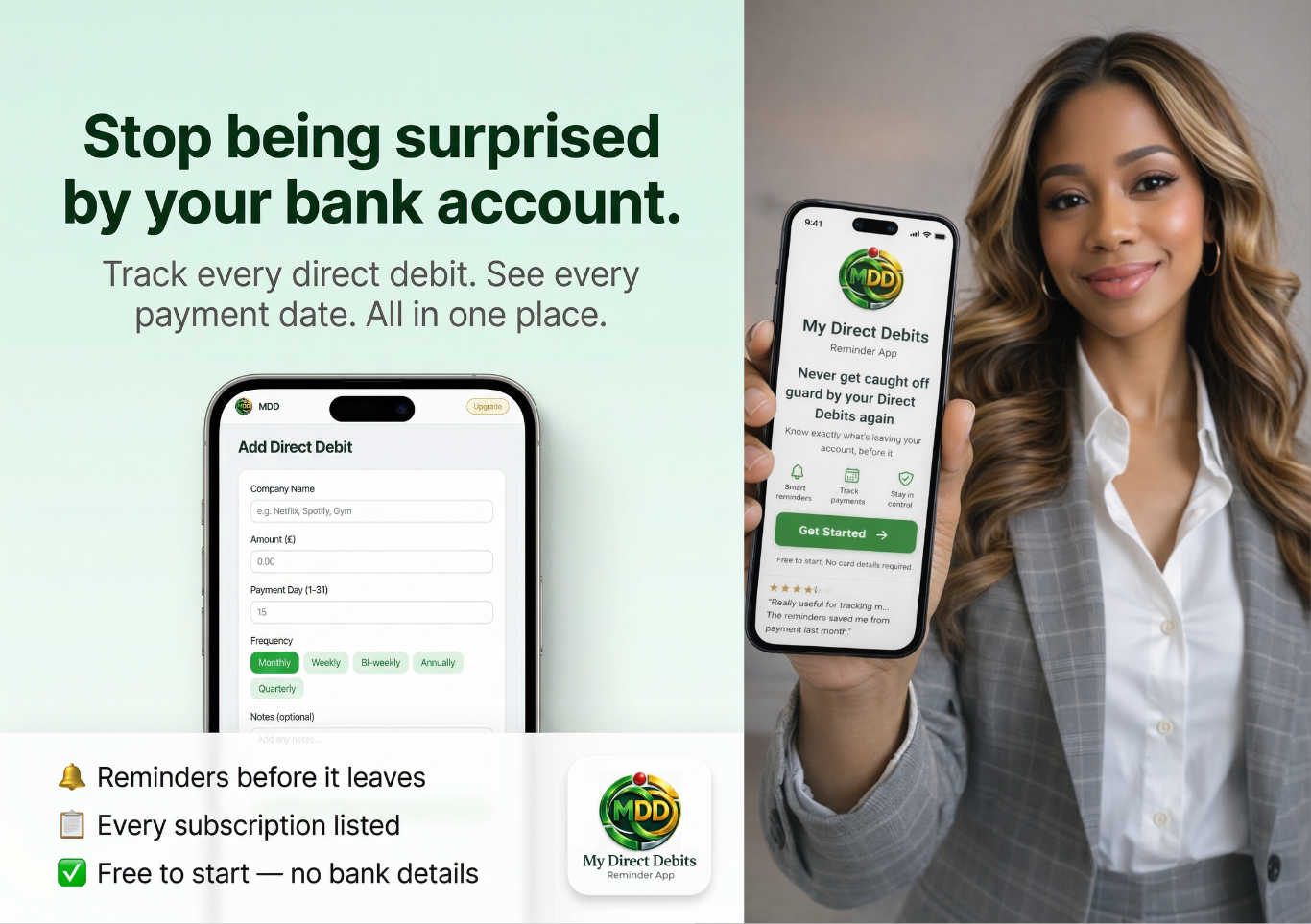
- A clear view of upcoming debits
- Reminders before they happen
- A system that works independently of your bank
Frequently Asked Questions
Why don't banks notify before payments?
Most systems are built around completed transactions, not future ones.
Can I get alerts before payments leave?
Yes, by using a reminder-based system.
Is this different from banking alerts?
Yes, it focuses on future payments rather than past activity.
Take Control of Your Payments
Start tracking your direct debits and subscriptions — free, simple, and no bank access required.
Get Started FreeRelated Articles
Are Banks Financially Incentivised to Prevent Financial Difficulty—or Merely Manage It?
Should financial institutions continue perfecting the management of financial failure, or begin building the infrastructure to help customers prevent it?
Failed Payments, Small Fees And A Bigger Missed Opportunity For Banks
Banks can see payment stress before a Direct Debit fails, yet revenue is still built on penalties, not prevention. Here’s why that needs to change—and how.
How Small Payment Nudges Help Stop Debt Problems Escalating
Missed payments rarely start as a crisis. This article shows how small, well-timed payment reminders can quietly prevent debt problems from escalating.