How Small Payment Nudges Help Stop Debt Problems Escalating
Sam didn’t realise anything was wrong until his balance alert pinged at 7:04am.
His phone lit up with a message from his bank: “Your balance is now below £0.00.”
The streaming trial he’d meant to cancel. The insurance renewal he’d forgotten about. A gym membership he hadn’t used in months. None of them huge on their own. Together, they tipped him into his overdraft the day before rent.
Sam isn’t reckless. He’s working, he’s trying, he’s already worrying about money. What actually failed him wasn’t self-control. It was timing, visibility and headspace.
That is exactly where small payment reminders can make a disproportionate difference.
Why the small stuff matters more than it looks
From a balance sheet perspective, a £7.99 subscription or a £12.50 charity direct debit is noise.
From a household budget perspective, these “small” payments are often the straw that breaks the camel’s back in a tight week.
And from a systemic perspective, they can be the early warning signals that never quite get acted on in time.
Two things are usually true at the point a payment causes a problem:
- The customer is already mentally overloaded.
- The organisation only sees the issue once money has already moved.
People rarely wake up in “problem debt” overnight. Instead, they move through a sequence:
1. Reduced headroom 2. Small payment surprises 3. Missed or bounced payments 4. Fees, charges, collections activity 5. Avoidance, anxiety, disengagement
Those “small payment surprises” in the middle are exactly where simple, customer-controlled reminders can interrupt the pattern.
What a genuinely small nudge looks like
When people hear “payment reminders”, they often think of:
- Collections letters
- Final demands
- SMS chasers after a bill is already late
By then, harm has already started.
The kind of reminder that prevents bigger problems looks very different:
- It happens before money leaves the account.
- It is initiated and controlled by the customer.
- It is neutral: no pressure, no sales, no upsell.
- It is channel-flexible: email, notification, calendar – whatever suits the person.
- It links directly to a simple next step (review, cancel, move money, seek help).
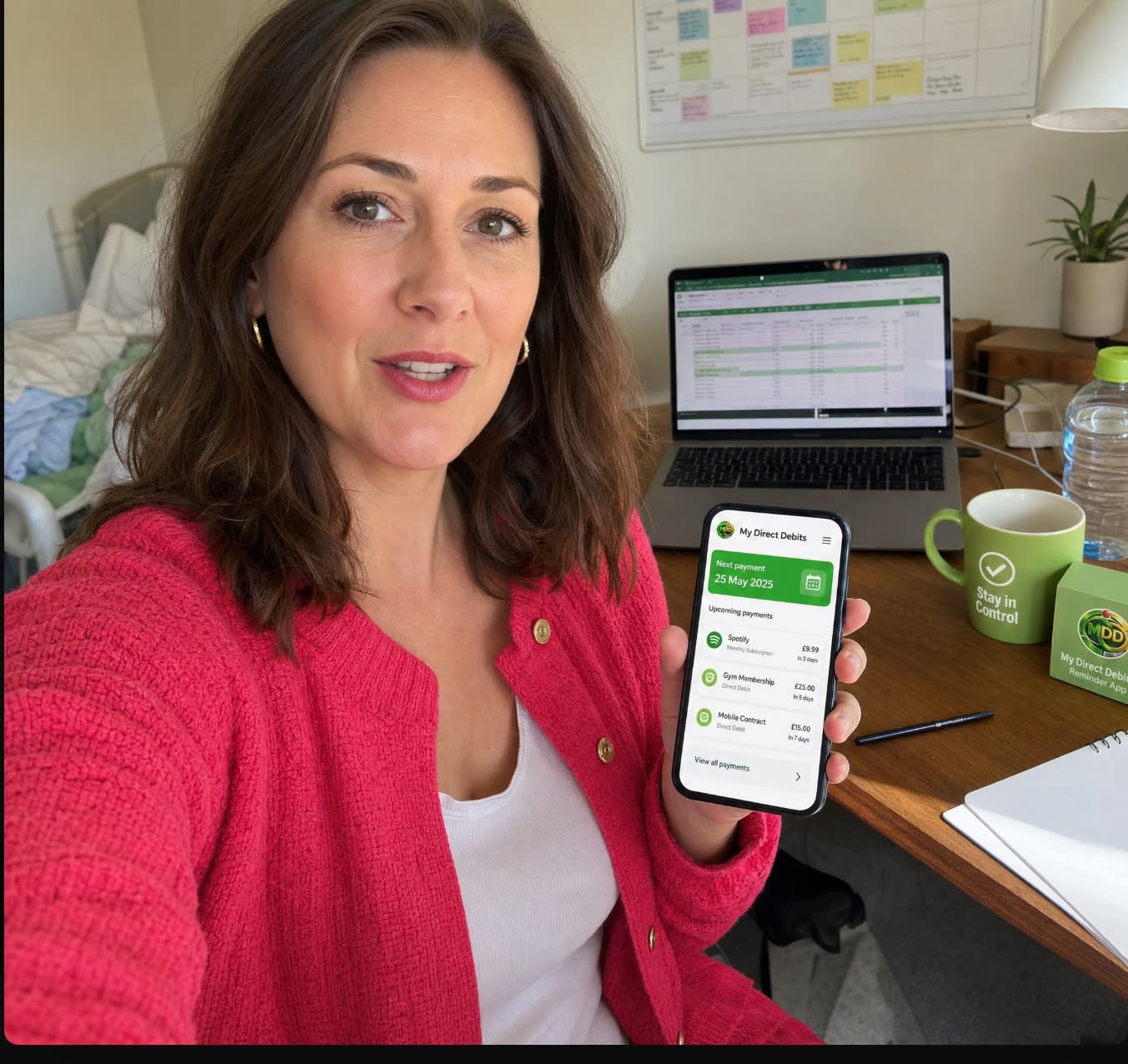
My Direct Debits (MDD) sits squarely in this space.
- It does not connect to bank accounts.
- It does not see transactions or balances.
- It cannot move money or change mandates.
Instead, customers manually add their direct debits, standing orders and subscriptions, then set reminders before each payment date. MDD then gives them timely prompts and visibility, so they can act while there is still room to manoeuvre.
That might sound small. But at scale, across vulnerable and non-vulnerable customers, it can quietly change outcomes.
Why this matters for Consumer Duty and debt prevention
For banks, fintechs, lenders and advice organisations, the FCA’s Consumer Duty has made one thing crystal clear: good outcomes are not a nice-to-have.
Most of the current tooling and controls are back-loaded:
- Affordability assessments at onboarding
- Persistent debt checks
- Arrears strategies and vulnerability flags
- Collections and forbearance options
All of these are necessary. None of them operate at the precise moments people are making day-to-day payment decisions.
Small, pre-emptive payment reminders can:
- Reduce the likelihood of missed payments and associated fees.
- Support customers with fluctuating incomes, zero-hours contracts or gig work.
- Give people with mental health or cognitive challenges an extra layer of support they control themselves.
- Encourage earlier engagement with debt advice before things snowball.
Put simply: they close a timing gap the industry has historically not been able to reach.
The psychology: why timing and control beat more information
Most customers do not need more financial education in the abstract. They broadly know that missing payments or sitting in overdraft is bad news.
The problem is less about knowledge and more about:
- Limited bandwidth: juggling work, family, health and admin.
- “Tunnel vision” under financial stress, where tomorrow’s bill feels less urgent than today’s crisis.
- Memory and executive function issues, especially in people living with mental health conditions, ADHD, or early cognitive decline.
Well-timed reminders help because they:
- Arrive close to the decision point. Not weeks before, when intent is high but life gets in the way.
- Turn vague awareness (“I should sort my bills”) into a specific, manageable task (“Your insurance is due in 3 days – still right for you?”).
- Reinforce a sense of agency: “I chose this reminder, I can choose what to do next.”
That sense of control matters. People are more likely to act on support they feel they have opted into, not had imposed.
Where the current ecosystem falls short
Right now, customers sit in a patchwork of systems:
- Bank apps showing balances and (sometimes) upcoming payments
- Separate portals for utilities, insurance, mobile, streaming
- Email inboxes full of auto-renewals and “we’re updating our prices” notices
There are three common failure points:
1. Fragmented visibility People simply don’t have a single, clear picture of everything that is about to leave their account.
2. Alerts that come too late Some banks are improving with upcoming payment views, but many customers still only get alerted once the account is low, overdrawn, or a payment has failed.
3. Support that starts at the point of failure Debt advice, breathing space and forbearance are vital. But they usually enter the story after multiple missed payments, not before the first wobble.
MDD is deliberately simple because it targets that specific visibility and timing gap. It does not compete with bank apps or open banking tools; it complements them by providing human-friendly, user-set reminders focused purely on upcoming commitments.
How small reminders change real behaviour
Consider three typical scenarios.
The “I thought I cancelled that” subscription
A customer signs up for a free trial while money feels comfortable.
Thirty days later, things are tighter. The trial flips into a paid subscription. The email warning is buried in a crowded inbox.
Outcome without a reminder:
- The payment goes out unnoticed for several months.
- Frustration builds (“They’ve been taking this for ages!”).
- Customer complains to their bank or the merchant.
Outcome with a user-set reminder:
- The customer adds the trial end date into MDD when they sign up.
- A reminder arrives 5 days before the first paid payment.
- They can keep, downgrade or cancel in plenty of time.
That simple flow reduces complaints, chargebacks and ill-feeling, while helping the customer keep their budget aligned with what they actually use.
The tight month that becomes a missed payment
A customer knows their energy bill is due around the 15th. They also know school uniform, a car MOT and a rail season ticket are due the same month.
Without specific reminders, the mental maths is hard. Something gives.
With small nudges:
- They log their regular payments into MDD once.
- Three days before each due date, they get a reminder.
- They move money between accounts, adjust spending, or call the creditor proactively if needed.
This is not about perfect budgeting. It is about catching issues while the customer still feels able to act.
The client in advice who needs support between appointments
Debt advisers and money guidance services often help clients build budgets and list their priority bills.
The gap is what happens after the appointment.
MDD can sit alongside advice as a simple, practical support tool:
- Clients add their key commitments during or just after their advice session.
- They choose when and how they want reminding.
- The next month, as payments approach, they are nudged to pay, seek extra help, or talk to creditors early if they cannot.
This does not replace advice. It helps people act on it at the right time.
Why a non-bank, non-transactional tool matters
A natural question for banks and fintechs is: why not just build this into the banking app?

There are three reasons why an independent, non-bank, non-transactional tool can be powerful.
1. Trust and perceived safety Some customers are understandably wary of giving more data or control to any institution that also lends to them or charges fees.
Because MDD never sees bank data, does not connect to accounts, and cannot move money, it can feel like a safer place to organise payments.
2. Cross-provider view People hold multiple accounts and use different providers for bills, subscriptions and savings.
A neutral layer that sits above the banking system lets them see everything that is about to go out, in one place, regardless of where the money is held.
3. Clear role boundaries
- Banks and fintechs: hold money, run payments, manage risk and regulatory obligations.
- Advice services: provide regulated or guided support on options, rights and strategies.
- MDD: gives customers simple reminders and visibility so they can act between those points.
This clarity helps with Consumer Duty obligations too. MDD does not give advice or incent particular financial products. It is firmly in the “supporting good outcomes through awareness and timing” space.
Where this can fit in your organisation’s toolkit
If you are responsible for customer outcomes, vulnerability or debt prevention, it is worth asking:
- How early in the journey do we actually help customers see and manage upcoming commitments?
- What tools do we put in people’s hands before they start missing payments?
- Are we relying on customers to remember renewal dates and trial end points without support?
There are several practical ways to bring small payment reminders into your ecosystem.
- Signposting from your customer communications
Include a link to a simple reminder tool such as My Direct Debits from:
- Welcome journeys and onboarding emails
- Vulnerability support pages
- “Having trouble paying?” sections on bills and statements
- Integrating into advice and support pathways
Money advice organisations and charities could encourage clients to set up reminders during sessions, so the budget work lives on in day-to-day behaviour.
- Using it as a preventative support offer
For customers regularly flirting with overdrafts or near-misses, signposting to a neutral reminder tool is a low-friction, non-judgemental intervention.
If you want to see how MDD works in practice, you can create an account in minutes at /auth and explore it from a customer perspective.
Guardrails: what small reminders can and cannot do
It is worth being clear-eyed. Payment reminders are not a silver bullet.
They cannot:
- Make unaffordable products suddenly affordable.
- Replace fair pricing, forbearance, or breathing space schemes.
- Solve structural income inadequacy.
What they can do is:
- Reduce avoidable harm, like fees triggered by simple forgetfulness.
- Make it easier for customers to keep priority bills on track.
- Support people to act earlier and with more confidence.
In the context of the Consumer Duty, that is material. A small, low-cost intervention that helps thousands of customers avoid falling into arrears is a meaningful shift in outcomes.
A practical next step
If you are building or refining your debt prevention strategy, consider testing a simple question:
“What would it look like if every customer who wanted it had a clear, user-controlled view of all their upcoming commitments?”
Then explore how that might be supported:
- through your own communications
- through partnerships with independent tools like My Direct Debits
- through integration into your advice and vulnerability journeys
Small payment reminders will never make headlines. But for the Sams of this world, they can be the difference between a tight month and the start of a debt spiral.
And for organisations serious about prevention, they are a practical, human-sized way to move from telling people what good money management looks like, to quietly helping them do it at the right moment.
If you would like to understand how your customers or service users might use My Direct Debits alongside your existing support, you can start by creating a free account at /auth and exploring the simple set-up flow yourself. You can also learn more about how it works at /how-it-works and consider where it could sit in your own Debt Prevention Toolkit.
Take Control of Your Payments
Start tracking your direct debits and subscriptions — free, simple, and no bank access required.
Get Started FreeRelated quizzes
A quick 60-second self-assessment if you'd like to dig deeper:
Related Articles
Are Banks Financially Incentivised to Prevent Financial Difficulty—or Merely Manage It?
Should financial institutions continue perfecting the management of financial failure, or begin building the infrastructure to help customers prevent it?
Failed Payments, Small Fees And A Bigger Missed Opportunity For Banks
Banks can see payment stress before a Direct Debit fails, yet revenue is still built on penalties, not prevention. Here’s why that needs to change—and how.
Why Money Advice Organisations Need Preventative Payment Support
Most money advice conversations start after the damage is done. Here’s why preventative payment tools should sit alongside debt advice, shaping behaviour before cash leaves an account.